
International Law
Humanitarian law and the human rights covenants, policies and interpretations are closely interrelated. This page is a listing of many human rights policies from the United Nations which can be used in supporting BDS actions as part of international law.
Helpful resources
The most consistent and universal demand among advocates for justice in Israel/Palestine is that Israel should comply with international law. Therefore, to be effective, advocates will need some familiarity with international law and how it applies to issues in Israel/Palestine. ... to read in full, see: Palestine Portal
Further commentary on violations of Palestinian rights, al Shabaka: The Escalation of Israeli Collective Punishment of Palestinians
Laws on the books

Treaties, charters & conventions
- 1899 Hague Convention II (1899)
- 1945 United Nations Charter (1945)
- 1948 Universal Declaration of Human Rights (1948)
- 1949 Geneva Convention IV (1949)
- 1966 International Covenant on Civil and Political Rights – Full (1966)
- 1966 International Covenant on Economic, Social and Cultural Rights – Full (1966)
- 1973 International Convention on Crime of Apartheid – Full (1973)
- 1977 Additional Protocols to Geneva Convention IV (1977)
- 1989 Convention on the Rights of the Child (1989)
International Court of Justice · 2004
UN resolutions
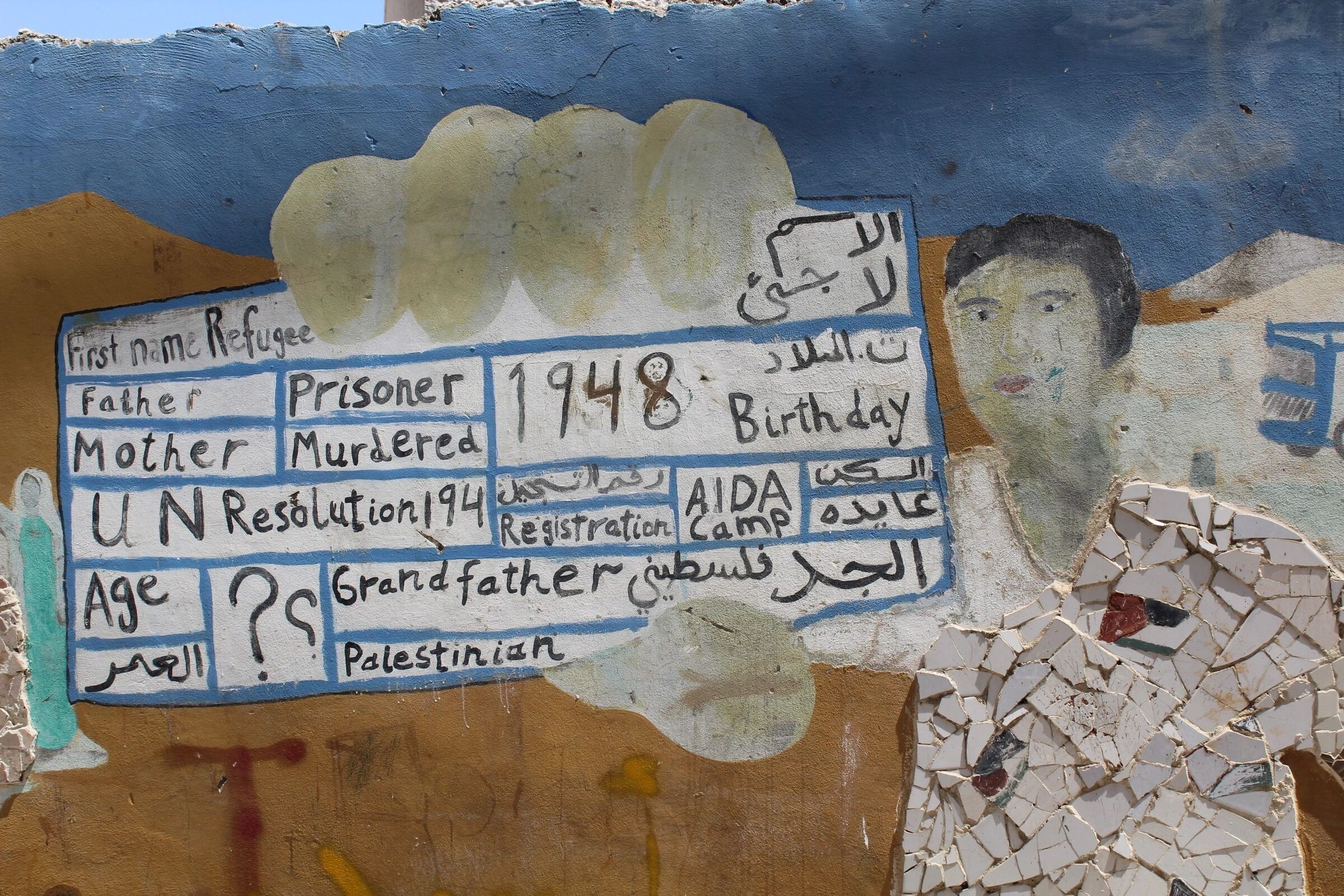
- 1948 UN General Assembly Resolution 194 (1948)
- 1967 UN Security Council Resolution 242 (1967)
- 1968 UN Security Council Resolution 252 (1968)
- 1969 UN Security Council Resolution 267 (1969)
- 1973 UN Security Council Resolution 338 (1973)
- 1979 UN Security Council Resolution 446 (1979)
- 1979 UN Security Council Resolution 452 (1979)
- 1980 UN Security Council Resolution 471 (1980)
- 1980 UN Security Council Resolution 476 (1980)
- 1980 UN Security Council Resolution 478 (1980)
- 2016 UN Security Council Resolution 2334 (2016)
Rights of nations & individuals
The human rights movement grew out of the disasters of World War II and is at the basis of international law theory and practice. Individuals as well as nations have rights that are not negotiable. Basic civil and political rights of individuals and nations are part of Section 3 (in list below), and include economic, social and cultural rights.
Among the rights of nations are:
- the right to self determination
- the right to own, trade, and dispose of their property freely, and not be deprived of their means of subsistence
Among the rights of individuals are:
- the right to legal recourse when their rights have been violated, even if the violator was acting in an official capacity
- the right to life
- the right to liberty and freedom of movement
- the right to equality before the law
- the right to presumption of innocence til proven guilty
- the right to appeal a conviction
- the right to be recognized as a person before the law
- the right to privacy and protection of that privacy by law
- freedom of thought, conscience, and religion
- freedom of opinion and expression
- freedom of assembly and association
The UN human rights system
This list on UN page here.
1 Introduction to the International Human Rights System 2
2 The International Covenant on Civil and Political Rights (ICCPR) 4
3 The International Covenant on Economic, Social and Cultural Rights (ICESCR) 2
4 The Convention on the Rights of the Child 4
5 The Convention on the Elimination of Discrimination Against Women 4
6 The Convention Against Torture, and other Cruel, Inhuman and Degrading Treatment and Punishment 4
7 The International Labour organization (ILO) 2
8 Other norms & standards 1
9 Other International Mechanisms 1
- 9.1 Other International Mechanisms including status of women
10 Human Rights and Humanitarian Law 5
Cases at the ICC now
All related motions, findings and pre-trial decisions can be found at this link, which has been updated as of June 2020.
Also available is a record of ICC Pre-trial actions and submissions, April 2020 related to claims that the ICC can hear claims against the West Bank, East Jerusalem and Gaza.
The role of the Rome Statute and the signing of that by the government of Palestine allows standing for Palestine in filing cases alleging violations of international law by Israel.
-
2009 · Background
In 2009, the Palestine Authority lodged an ad hoc declaration to the ICC accepting the jurisdiction of the Court for crimes committed since 2002. For three years the cases remained pending until the United Nations could determine the status of Palestine within the United Nations as the basis for the ICC having jurisdiction in the cases.
-
29 November 2012
UN General Assembly resolution 67/19 passed, upgrading Palestine to “a non-member observer state” status in the United Nations. The change in status was a “de facto” recognition of the statehood of Palestine.
-
1 – 2 January 2015 · 1 April 2015
On 1 January 2015, the Government of Palestine lodged a declaration under article 12(3) of the Rome Statute accepting the jurisdiction of the International Criminal Court (ICC) over alleged crimes committed "in the occupied Palestinian territory, including East Jerusalem, since June 13, 2014". On 2 January 2015, the Government of Palestine acceded to the Rome Statute by depositing its instrument of accession with the UN Secretary-General. The Rome Statute entered into force on 1 April 2015.